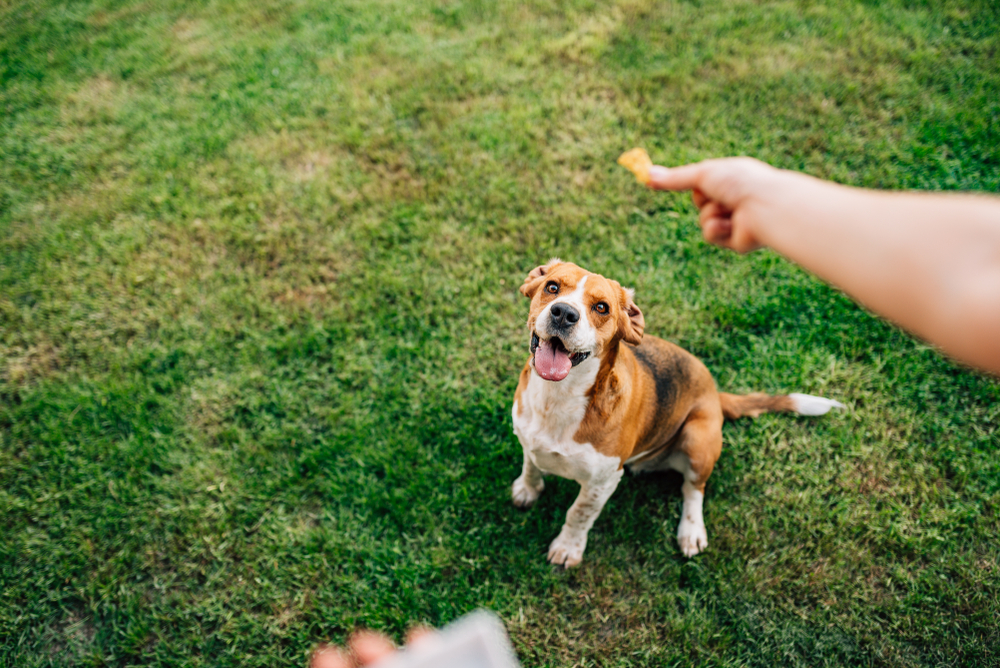
Who doesn’t love to give their furbabies a treat? But what’s good for them and what is not? Below are tips from experts on which treats they recommend.
Keep your eye on the dog
No two dogs are exactly alike. Just like with your children, some dogs may be able to handle just about any treat while others may have allergies, food sensitivities, or simply be an aggressive chewer. No matter what treat you give to your dog, please supervise him or her while they enjoy it, so you can monitor how they chew and avert injury or worse.
What about rawhide?
Rawhide, made from dried animal skin, is a favorite treat for dogs. For the most part, rawhide can withstand even aggressive chewers because it softens after a while without splintering. That being said, if you choose to give your dog rawhide, experts recommend only purchasing the treats that are made in the United States. In addition, when choosing rawhidego for thick over thin slices, and avoid any that are stark white—they may have been bleached.
Bear in mind, dogs with allergies or food sensitivities may have negative reactions to rawhide, including irritable bowel or diarrhea. Please keep an eye on your dog(s) while he is chewing on rawhide, because pieces do break off and can become a choking hazard. Never leave your dog alone while he chews rawhide because pieces can become lodged in his esophagus or the digestive tract. Although rare, rawhide can have toxic chemicals, or become tainted by salmonella or E. coli.
No moo-re cow hooves
According to health statistics, veterinarians see more cut mouths from animal hooves than any other type of recreational bone. When a dog chews on hooves, pieces can break off and be swallowed, causing an irritated digestive system. Worst case, the hooves may obstruct or perforate the bowels.
Given this, many veterinarians recommend their patients avoid hooves altogether. According to veterinarian Karen Becker, hooves are sharp and brittle, and dogs can incur oral trauma from them. If you insist on giving your dog cow hooves, we recommend only purchasing the ones made in America. If you see damage to your dog’s mouth after he gnaws at the hoof, please take it away.
Antlers are for deer
If your dog is not a particularly aggressive chewer and enjoys gnawing on a bone, antlers are probably okay. Antlers are as tough as rock, however, and if you have given one to your dog, you may notice they can grind it for a prolonged period of time with no effect. According to DVM, Dr. Keven Stepaniuk, dogs are not meant to chew on antlers. Because the antlers are so tough, they can break your dog’s teeth, causing pain and making them prone to infection.
Just say no
1. Long-lasting Himalayan chews are made from yak or cow milk and make a good substitute for dogs who are unable to digest certain proteins. Similar to the antlers, however, they can splinter and crack your dog’s teeth.
2. Avoid giving your dogs dried pig ears. Because they’re very greasy, they are tough on a dog’s stomach. Veterinarian Dr. Marty Becker also remarked on national TV that hormone injections are given in a pig’s ear. Perhaps you’d like your dog not to ingest those.
3. Pigs’ ears have also been linked to salmonella nationwide according to the CDC. At least 143 people have become ill and 110 hospitalized. Dogs can become sick from eating contaminated treats, and so can the individuals who handle them.
4. While it seems normal to give a dog a bone, recent warnings from the FDA warned pet owners to avoid commercial bones. There have been dozens of cases of illnesses, some of them fatal. You may give your dogs uncooked bones from the butcher, or pre-packaged bones from local or online pet stores.
5. More reports from the FDA warn that bones dried through baking or smoking may contain additives. These may cause all sorts of digestive problems, such as choking, intestinal blockages, vomiting and diarrhea.
When in doubt, it’s always a good idea to ask your local veterinarian. Best wishes!