Children whose Body Mass Index (BMI) exceeds 30 classify as obese, while those with a BMI standing at 25 are overweight. Despite the health risks associated with these conditions, they remain rampant in the United Kingdom and occur in over 25% of children aged between two and fifteen. But proponents of healthy communities are not sitting on their hands observing the situation.
A primary school in London was recently part of a scientific study investigating how gardening at school could help reduce cases of overweight or obese children. Preceding the research were findings that inadequate exercising and poor eating habits were behind the high child obesity incidences. Previous studies showed that of all eleven-year-old residents of Europe and Canada, approximately 40% consumed vegetables daily. Only 24% exercised moderately for about an hour daily. It, thus, made sense to ascertain the impact gardening and regular eating of vegetables had on obesity.
Conducting the study
Health professionals, including the renowned Dr. Ruth Bell of Global Health Equity Group, designed the study. They had help from a charity organization and an NGO. These were Conservation Volunteers and Meat Free Monday, respectively.
Rather than take it upon themselves and dictate how best to conduct the study, the researchers allowed the children to chip in. Of course, core activities like data collection and analysis remained with the adults. However, pupils had to identify ideal places within the school compound to carryout gardening.
The research, which lasted one academic year, involved sixty children, half of whom were the control group. The first lot of 30 pupils would garden for two hours weekly for the entire research period. The control group, however, got into gardening during the last half of the research period.
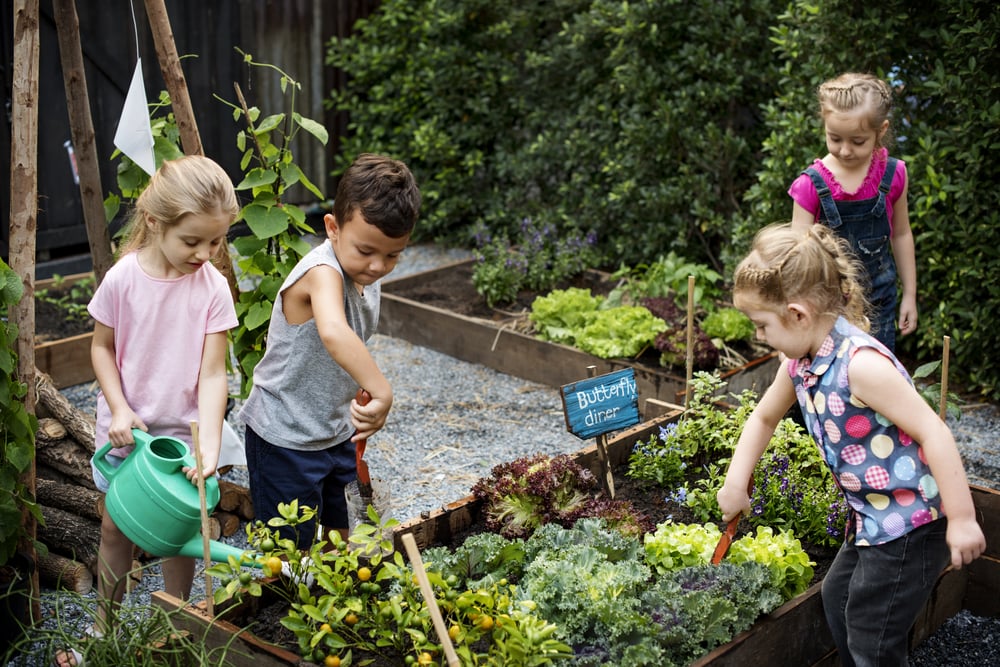
Some of the gardening activities undertaken by the pupils were physical. For example, they would weed and mulch after sowing on raised beds. However, there were times when adults would enlighten the children on the benefits of consuming vegetables.
Data collection and findings
The researchers relied on two data collection tools: a questionnaire and a GENEActiv accelerometer. The questionnaire sought to establish the pupil’s thoughts on vegetables. Further, it investigated the frequency at which the children included a fruit or vegetable in their meals. On the other hand, accelerometers reported the children’s activity levels.
An analysis of the data revealed that the gardening pupils had a higher propensity to vigorous physical exercises. They also had an increased interest in school outdoor activities despite the cold winter weather. Those who gardened did not sit as much as the children in the control group. The researchers also reported pupils feeling more masculine than they were before the program.
However, findings indicated that the benefits of gardening to children transcended beyond physical fitness. A percentage of the pupils reported feeling encouraged to eat vegetables they were unwilling to try before the study. The discovery was in line with another finding that children are more likely to consume vegetables they took part in planting. Pupils also cited knowing more about healthy eating habits and plants in general.
The study established that gardening, and outdoor activities in general, were perfect excelling environments for pupils who had difficulty shining in indoor classwork. For example, a pupil discovered their ability to lead while gardening and become a member of the school’s scouts association. For children who found it hard to focus in class, gardening was a tool for elevating their interest in school work. They attended school regularly as a result.
The multiple advantages of gardening to children
Conclusively, schools can use gardening to keep the child obesity problem at bay. Further, they can use it as an opportunity to educate pupils on the nutritional benefits of increased vegetable consumption. Gardening is also a motivating factor for both students and teachers. It can potentially make the learning process more enjoyable.